
How SEO Changed in 2026: Everything a Connecticut Business Needs to Know
For years, local SEO was a keyword game. Rank for “electrician Fairfield CT” Show up in the Google 3-pack. Get the call. That still matters. But the rules around “near-me” SEO have shifted more in the last two years than in the decade before that.
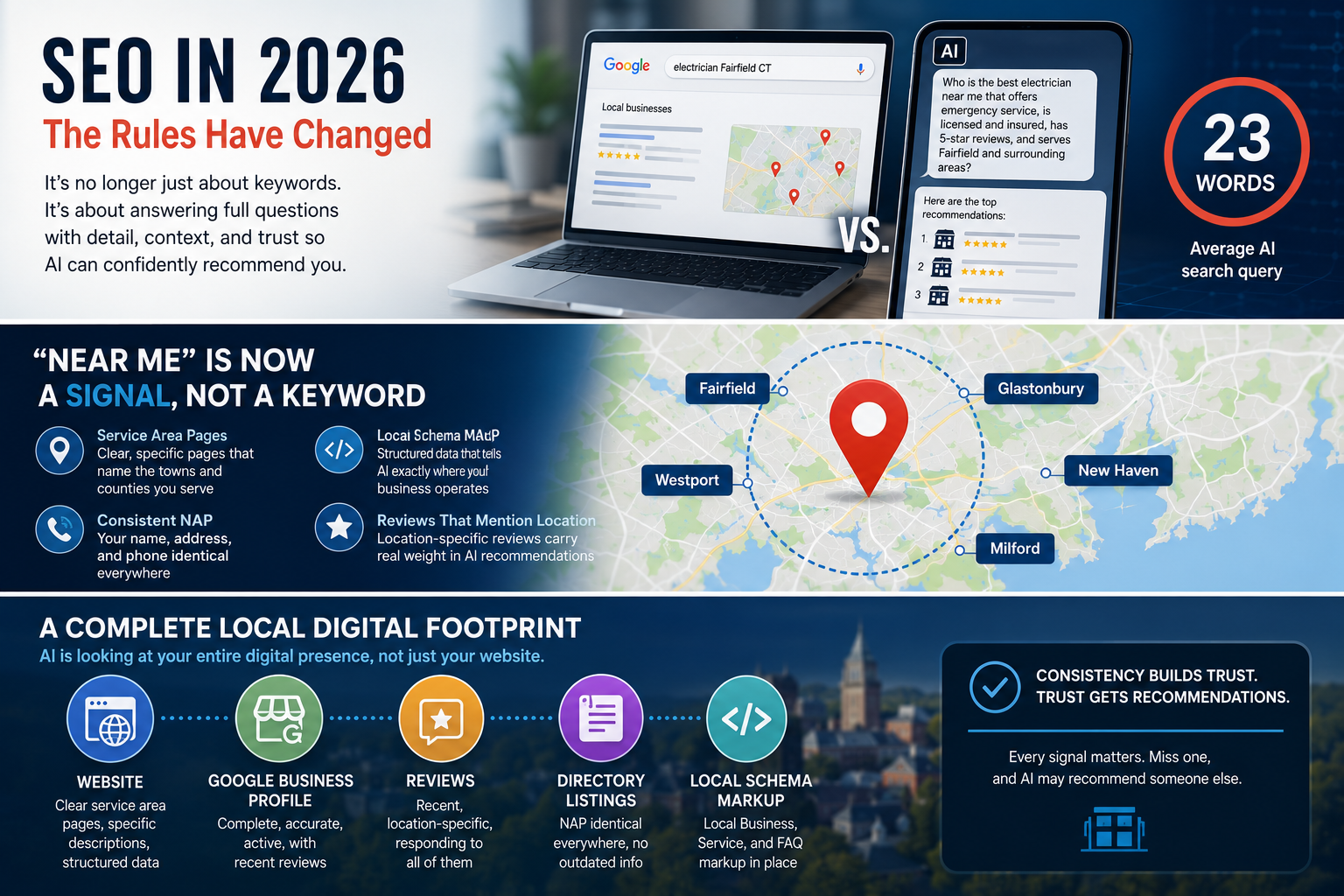
The average Google search is 4 words. The average AI search query is 23 words.
That gap tells you everything about how local search has changed. It is no longer about matching a keyword. It is about answering a full question, with specifics, context, and enough detail for AI to feel confident recommending you.
The 23-Word Query
The average traditional Google search is 4 words. The average AI search query is 23 words. That gap tells you everything about how local search has changed. The AI reads your content looking for the full answer to that question, not just a keyword match.
Here is what that means in practice:
- A page that ranks for “auto repair Glastonbury” might not get recommended by AI if it does not answer what makes you different, how quickly you turn around repairs, or what brands you specialize in
- A page that answers the full question, including specifics about your service, your area, and why customers choose you, is far more likely to be cited in an AI recommendation
- Short, thin content built for keyword rankings does not serve conversational AI queries
For CT service businesses this means one thing: stop writing for keywords and start writing for questions.
How AI Handles Local Queries Differently
As we explained in our breakdown of the five signals AI checks, AI needs consistent, structured information across your entire digital footprint to make a confident recommendation. One weak signal and it moves on to whoever is next.
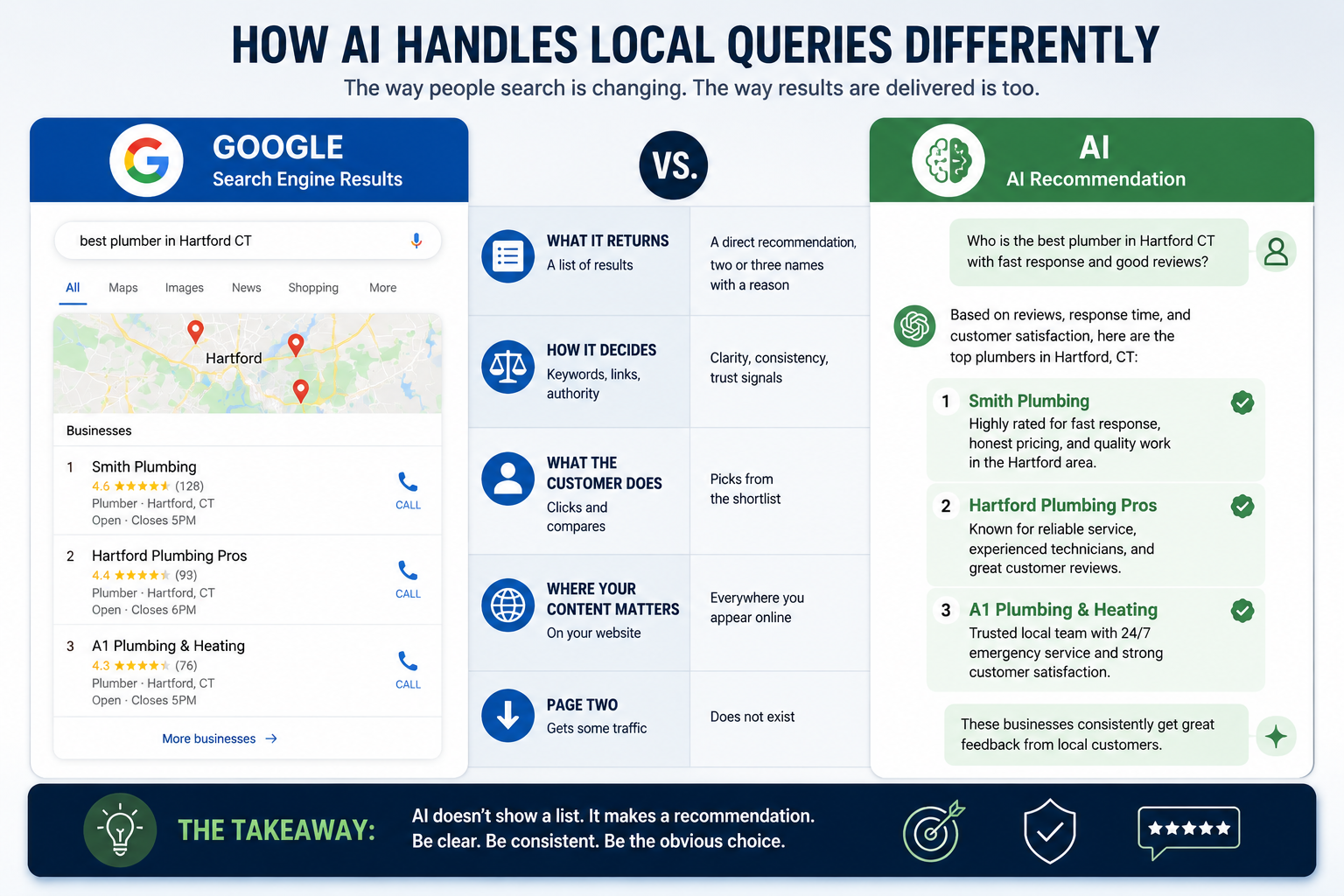
| AI | ||
| What it returns | A list of results | A direct recommendation, two or three names with a reason |
| How it decides | Keywords, links, authority | Clarity, consistency, trust signals |
| What the customer does | Clicks and compares | Picks from the shortlist |
| Where your content matters | On your website | Everywhere you appear online |
| Page two | Gets some traffic | Does not exist |
Near Me Is Now a Signal, Not a Keyword
People do not type “near me” as much as they used to. They expect AI to know where they are and factor it in automatically. When someone opens ChatGPT and asks for a roofer in New Haven, they do not add “near me.” The AI infers location from context, from their device, and from their profile.
It is about giving AI everything it needs to confidently place your business in a specific location.
What AI looks for to establish local relevance:
- Service area pages: Clear, specific pages that name the towns and counties you serve
- Consistent NAP: Your name, address, and phone number identical across every platform, as we covered in our Google Business Profile guide
- Local schema markup: Structured data that tells AI exactly where your business operates
- Reviews that mention location: Customers saying “best electrician in Fairfield” or “fastest response in Westport” carry real weight in AI recommendations
What a Complete Local Digital Footprint Looks Like
The businesses AI recommends locally are not always the ones with the best websites. They are the ones whose entire digital presence tells a consistent, verifiable story.
| Component | What it needs to say |
| Website | Clear service area pages, specific descriptions, structured data |
| Google Business Profile | Complete, accurate, active, with recent reviews |
| Reviews | Recent, location-specific, responding to all of them |
| Directory listings | NAP identical everywhere, no outdated information |
| Local schema markup | Local Business, Service, and FAQ markup in place |
Every one of these components feeds into what AI reads when someone in Connecticut asks for a recommendation in your category. Miss one and the picture becomes incomplete. An incomplete picture means no recommendation.
The Connecticut Context
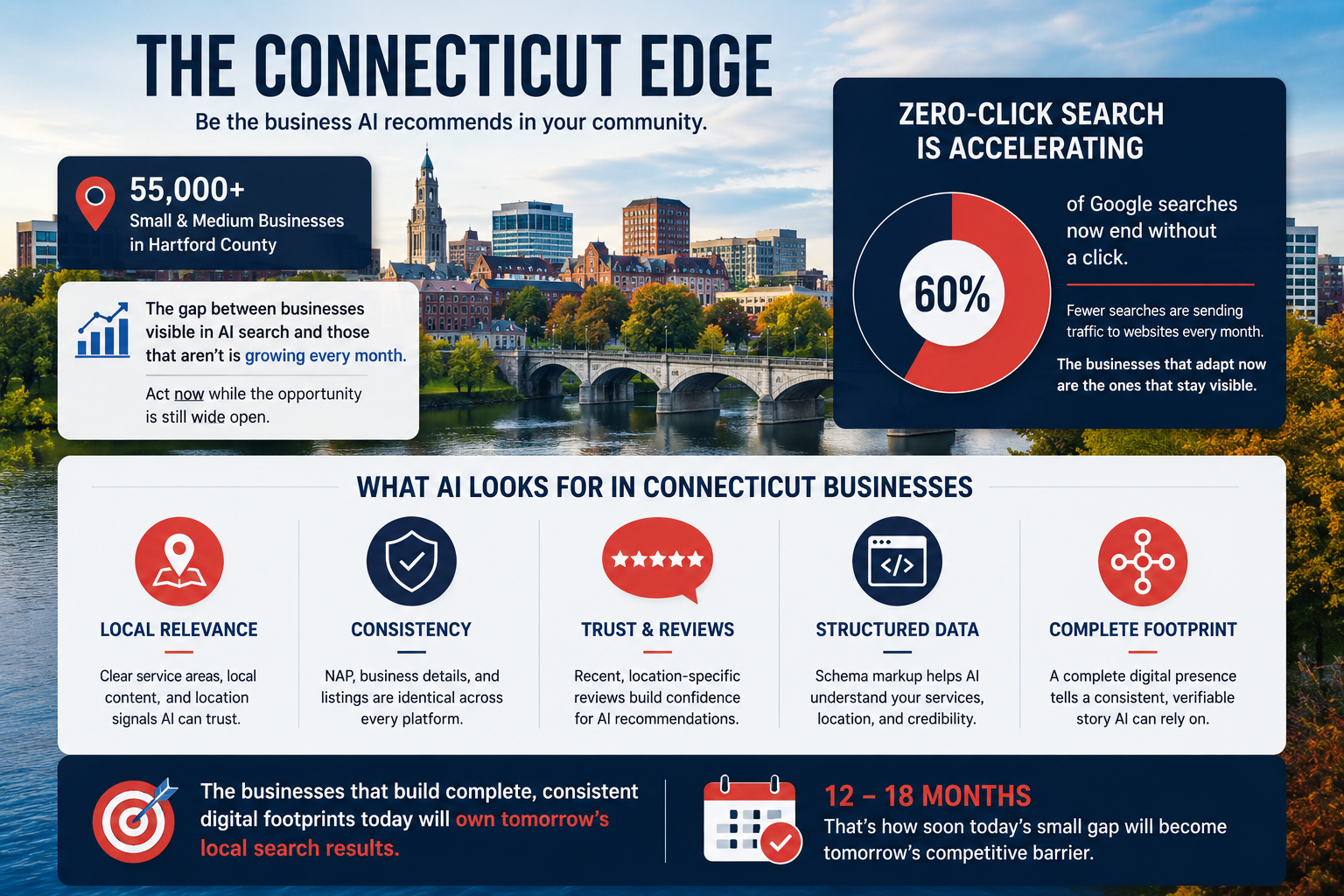
There are roughly 55,000 small and medium businesses in Hartford County alone. The gap between the businesses visible in AI search and the ones that are not is growing every month. Right now that gap is still small enough that moving on it makes a real difference. In 12 to 18 months it will look the same as Google SEO: competitive, expensive, and much harder to close.
As we covered in our post on the 2026 search market data, the zero-click search trend is accelerating. Fewer searches are sending traffic to websites every month. The businesses that adapt now are the ones that stay visible as that shift continues.
Want to See if AI Is Recommending Your Business?
Businesses we audit are often showing up very differently in AI search than they expect. Their traditional SEO looks solid. Their AI visibility tells a completely different story.
We are a Glastonbury-based digital marketing agency, and we have been helping Connecticut businesses get found online for 12 years. From website design and local SEO to social media and content creation, we build digital presences that actually work. Take a look at our portfolio or browse our case studies.